Your Cart is Empty
Choosing the right baking mold material has a direct impact on product quality, consistency, workflow, and operating costs in professional kitchens. While metal pans have long been the industry standard, alternative materials such as silicone and wood-fiber molds are increasingly used for specific applications.
This guide provides a practical, factual comparison of wood, metal, and silicone baking molds to help bakeries make informed decisions based on production needs—not marketing claims.
SEO Keywords: baking mold materials, wooden baking molds, metal baking pans, silicone baking molds, professional bakery tools
Metal molds, typically aluminum or steel, are widely used in commercial bakeries due to their durability and heat conductivity.
Advantages:
Excellent heat conduction
Durable for long-term use
Suitable for high-volume production
Available in many standardized sizes
Considerations:
Require washing and drying after each use
Can require liners or greasing
Higher labor, water, and energy usage
Prone to wear, warping, or coating degradation over time
Metal molds are ideal for bakeries with established dishwashing capacity and standardized workflows.
Silicone molds are commonly used for specialty items, intricate shapes, and smaller batch production.
Advantages:
Flexible and non-stick
Easy product release
Suitable for complex shapes
Lightweight and stackable
Considerations:
Lower thermal conductivity than metal
Can lead to longer or uneven bake times
Require thorough cleaning
Limited lifespan in high-volume production
Can retain odors or discolor over time
Silicone molds work best for specialty applications rather than large-scale, repeatable production.
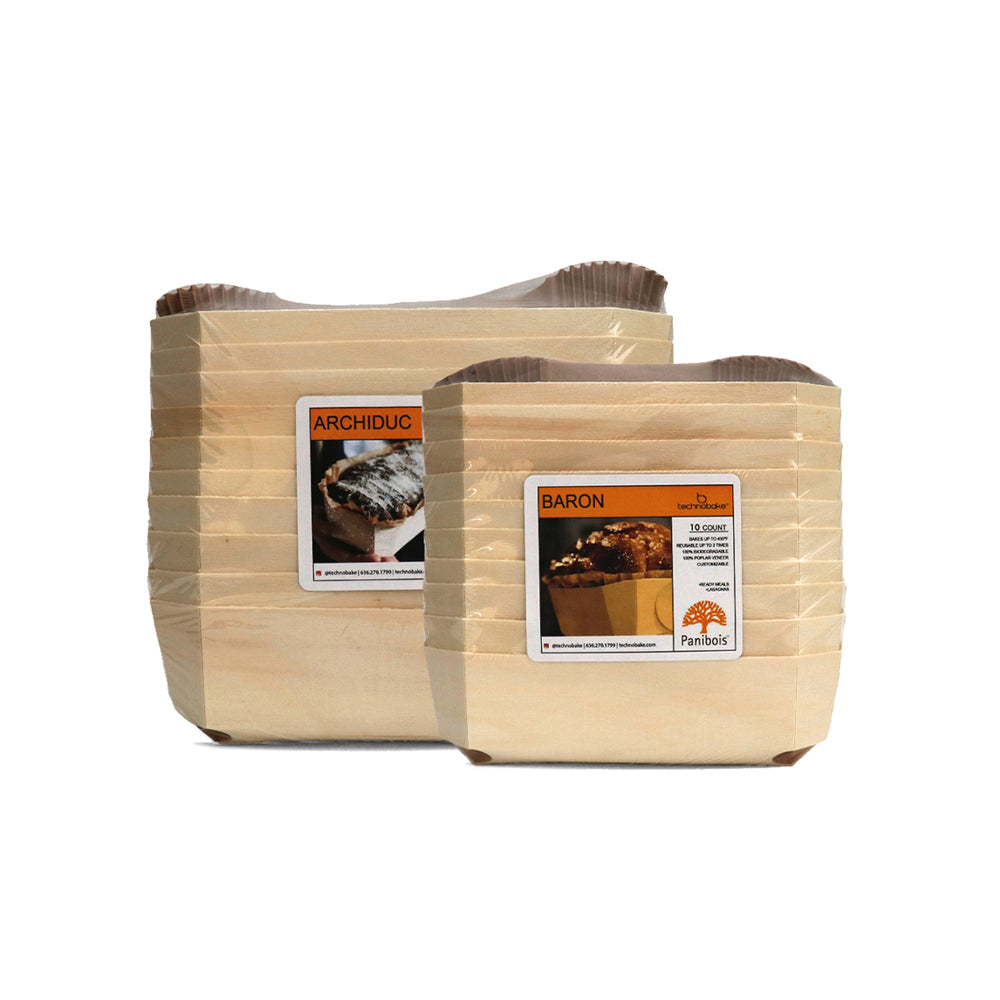
Wood-fiber baking molds are made from compressed paper and wood fibers sourced from responsibly managed forests. They are designed for single-use baking and presentation.
Advantages:
Biodegradable and compostable
No washing required
Reduce water, energy, and detergent use
Support bake-and-sell workflows
Provide consistent shape and portion control
Suitable for oven baking and retail display
Considerations:
Single-use by design
Best suited for products intended for direct sale or gifting
Requires proper storage to maintain structural integrity
Wood-fiber molds are commonly used for breads, cakes, and seasonal or gift-ready items where presentation and efficiency matter.
Most professional bakeries use a combination of mold materials, selecting the best option for each product line.
Key questions to consider:
Is the product high-volume or specialty?
Will it be sold directly after baking?
How important is labor and wash-time reduction?
Are sustainability goals a priority?
Does presentation impact perceived value?
The right mold choice supports both operational efficiency and product quality.
There is no single “best” baking mold material for every application. Metal, silicone, and wood-fiber molds each serve a specific role in professional baking. Understanding their strengths and limitations allows bakeries to optimize production, reduce waste, and deliver consistent, high-quality results.
Thoughtful tool selection is a key part of building a resilient and scalable bakery operation.
Comments will be approved before showing up.
Sign up to get the latest on sales, new releases and more …
Receive exclusive promotions and offers monthly. We will not spam your inbox.